
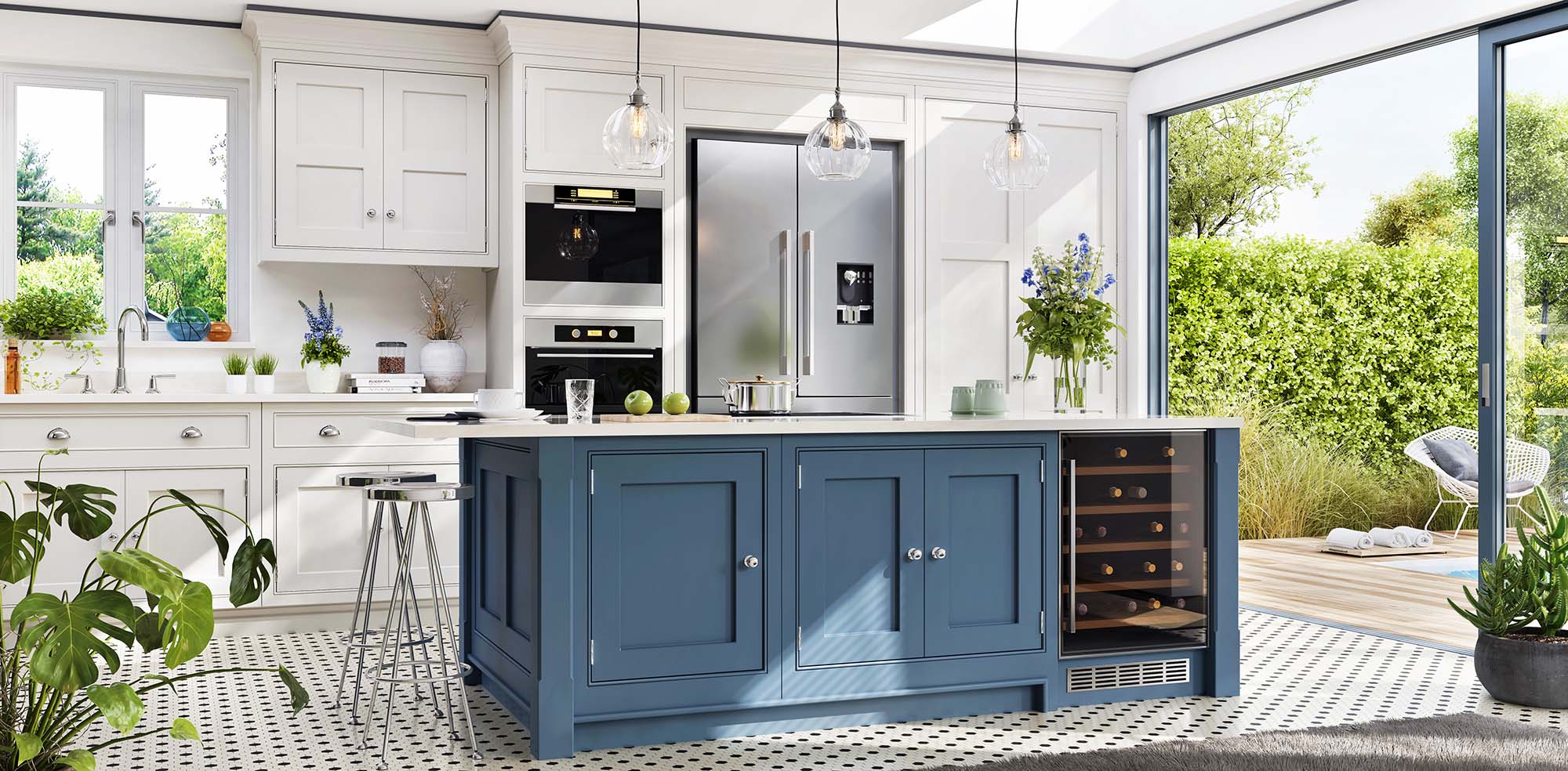
A kitchen does not need to use one cabinet color and one countertop finish to feel coordinated. In fact, some of the most interesting interiors are created by combining materials that offer contrast while still sharing a common design direction. Two-tone cabinetry, contrasting islands, and carefully selected countertop surfaces allow homeowners to introduce personality without making the kitchen feel disconnected.
The appeal of this approach is that it creates visual depth. A kitchen with one cabinet finish throughout can look clean and timeless, but a second finish can give the room more character. The island might feature a warmer wood tone, while the surrounding cabinets use a painted finish. The countertop can then connect the two through color, veining, or texture.
For homeowners considering a kitchen renovation, the challenge is finding the right balance. Too many competing colors and materials can make the room feel busy, while an overly cautious combination may not achieve the distinctive look the homeowner wants. A successful two-tone kitchen begins with a clear hierarchy: one finish should establish the foundation, another should create contrast, and the countertop should help bring everything together.
Start With a Clear Design Direction
Before choosing cabinet samples, decide what kind of atmosphere you want the kitchen to create. A warm and natural interior may combine wood cabinetry with creamy neutrals and softly patterned countertops. A contemporary kitchen may use flat-front cabinets, a darker island, and a restrained surface with subtle veining.
Transitional kitchens can combine traditional details with cleaner modern finishes. For example, a classic cabinet profile may be paired with a simple countertop and understated hardware. This approach can feel familiar without appearing dated.
Having a clear direction helps prevent individual materials from being selected simply because they look attractive on their own. A cabinet finish should be evaluated in relation to the countertop, backsplash, flooring, and lighting. Each decision should contribute to the same overall atmosphere.
It is also useful to collect inspiration images that show complete kitchens rather than isolated product samples. A photograph can reveal how colors, textures, and proportions work together in a finished room.
Choose Which Cabinet Finish Will Lead the Design
In a two-tone kitchen, one cabinet finish should usually serve as the main foundation. This is often the finish used across the perimeter cabinets, while a second color or material is introduced on the island or a selected cabinet section.
Natural wood finishes are receiving renewed attention in kitchen design. White oak, warm brown, and medium wood tones can create a connection to natural materials and bring warmth into a room. They can work particularly well with neutral countertops and simple hardware.
Painted cabinetry offers a different kind of flexibility. Warm whites, soft beige, muted greens, and deep blue tones can provide personality while allowing the countertop to become a prominent feature. The right choice depends on the amount of natural light and the other materials in the space.
When selecting the primary cabinet finish, consider how much of it will be visible. A color used across an entire kitchen will have a greater visual impact than one used only on a small island. A finish that looks subtle on a sample door may feel much stronger once repeated across a full wall of cabinetry.
Use the Island to Introduce Contrast
The island is a natural place to introduce a second cabinet finish because it often occupies a central position. It can be treated almost like a piece of furniture, with a different color, wood tone, or decorative detail from the surrounding cabinets.
For example, a kitchen with warm white perimeter cabinets might use a medium wood island to create depth. A room with natural wood cabinetry could introduce a muted green island for a more distinctive appearance. A darker island can also provide contrast in a kitchen dominated by light finishes.
The island does not need to be dramatically different to make an impact. A subtle shift in tone can create enough contrast to give the room a layered appearance. The key is ensuring that the finishes share compatible undertones and that the island does not look like an unrelated addition.
Countertop selection can reinforce this relationship. A surface that includes tones from both cabinet finishes can help connect them, while a contrasting island countertop can make the central feature even more distinctive.
Let the Countertop Connect the Materials
The countertop can act as a visual bridge between two cabinet finishes. If the kitchen combines wood and painted cabinetry, a countertop with warm neutral tones may help connect the materials. A surface with subtle veining can introduce movement without competing with the cabinet colors.
Quartz offers a range of colors and patterns, including options inspired by natural stone. Its versatility makes it possible to select a surface that supports both the main cabinet finish and the island. Natural stone options such as quartzite and granite offer their own distinctive patterns and variations.
When selecting a countertop, consider the amount of visual movement in the material. A dramatic pattern can become the main feature of the kitchen, especially when installed across a large island. If the cabinetry already includes strong color contrast or detailed door profiles, a quieter countertop may create better balance.
For a more understated interior, a light surface with soft beige or gray veining can complement both wood and painted finishes. For a stronger design statement, a darker surface or more pronounced natural pattern may create a striking focal point.
Understand Warm and Cool Undertones
One of the most common challenges in combining kitchen finishes is selecting colors that do not work together. Two materials may both be described as white, gray, brown, or beige, yet their undertones can make them appear very different when placed side by side.
Warm finishes often include hints of yellow, red, or golden brown. Cool finishes may lean toward blue or cooler gray. Neutral finishes sit closer to the middle, although they can still appear warmer or cooler depending on the lighting and surrounding materials.
A warm wood cabinet paired with a very cool gray countertop may create a contrast that feels unintended. This does not mean warm and cool colors should never be combined. It means the relationship should be deliberate. A transitional tone in the countertop or backsplash can help connect the different finishes.
Compare samples together under natural and artificial lighting. A combination that looks balanced in a showroom may appear different in a kitchen with warm lighting or strong daylight. Viewing the actual materials together is more reliable than selecting them separately based on color descriptions.
Use Hardware and Fixtures to Reinforce the Palette
Cabinet hardware, faucets, and lighting fixtures can help bring a two-tone kitchen together. They are smaller elements, but they repeat finishes throughout the room and contribute to the overall design language.
Brushed brass or warm metallic finishes can complement natural wood and creamy neutrals. Matte black hardware can create definition against lighter cabinets, while stainless steel and other cooler finishes may suit more contemporary palettes.
Consistency is useful, but every fixture does not need to be identical. The goal is to establish a clear relationship between the finishes. A faucet, cabinet pulls, and lighting fixtures can share a similar tone while still having different shapes and proportions.
Hardware should also be selected for practical use. The size, grip, and placement of cabinet pulls can affect how comfortable the kitchen is to use, particularly on frequently opened drawers and doors.
Do Not Let the Backsplash Compete With the Countertop
The backsplash is another opportunity to introduce color and texture, but it should be considered carefully when the kitchen already includes two cabinet finishes and a distinctive countertop.
If the countertop has pronounced veining, a simpler backsplash may help maintain visual balance. A subtle tile, a coordinated neutral surface, or a matching countertop material can allow the main features to stand out.
If the countertop is relatively quiet, the backsplash can introduce a more noticeable pattern or color. This can be particularly effective in a kitchen with simple cabinet doors and restrained hardware.
The backsplash should also relate to the cabinet colors. Repeating a subtle tone from the island or perimeter cabinets can help connect the different areas. Samples should be compared together before the final selection is made.
Plan the Layout Around Function, Not Just Appearance
A two-tone kitchen should be as practical as it is attractive. Cabinet placement, drawer storage, appliance locations, and island dimensions all influence how the room works. A beautiful island may become frustrating if there is insufficient clearance around it or if the seating area interferes with the main preparation space.
Think about how the household uses the kitchen. Is the island mainly for food preparation, casual dining, or entertaining? Does it need a sink, cooktop, or additional storage? Will children use it for homework or snacks? These questions help determine the appropriate size and configuration.
Cabinet storage should also be planned around daily routines. Deep drawers, pull-out storage, pantry organization, and dedicated appliance spaces can reduce countertop clutter and make the kitchen easier to use.
When the layout is planned properly, the different cabinet finishes and countertop materials become part of a functional design rather than decorative choices added at the end.
Make Sure the Combination Will Age Well
Design trends can provide inspiration, but a kitchen renovation is a long-term investment. It is worth choosing combinations that feel personal and have enough flexibility to remain appealing as tastes change.
Natural wood, neutral countertops, and understated cabinet profiles can create a durable foundation. More expressive colors can be introduced through an island, selected cabinets, or decorative elements that are easier to update later.
This does not mean avoiding bold design choices. A distinctive island color or dramatic countertop can be a successful long-term feature when it reflects the homeowner's preferences. The important thing is to make the decision intentionally and understand how it relates to the rest of the home.
Bring Your Two-Tone Kitchen Vision Together
A two-tone kitchen works best when every finish has a purpose. The main cabinets establish the foundation, the island introduces contrast, and the countertop connects the materials. Hardware, lighting, and backsplash selections then complete the composition while supporting the room's practical needs.
Explore the cabinet options and countertop selections from Hestia Kitchen & Bath Design LLC as you begin planning your kitchen. To discuss your ideas and renovation requirements, visit the contact page.
Whether you are planning a two-tone kitchen in Greenville, updating cabinetry in Winterville, or considering new countertops for a home in Ayden, Washington, or Williamston, a coordinated material palette can make the entire space feel more considered. With a new location coming soon, Hestia Kitchen & Bath Design LLC is preparing to help homeowners explore kitchen and bath designs that combine personal style with everyday function.